






2023. A new year has arrived and that is always a great time to take a critical look at yourself and set goals for the new year, a kind of "good intention." However, these often have a bit of a negative connotation. They are often far too big goals that you just can't change overnight. What makes that it often fails after a few weeks/months. For example: I want to live more sustainably by 2023. This covers so many different aspects and you don't know where to start. So it is better to take smaller steps to make sure it is easy to change and keep it up. A nice goal for a step in the right direction is: by 2023, really stop buying clothes from Fast Fashion chains. But why are these stores so bad? When you walk into a Fast Fashion store there is no telling how it was produced and what is so bad about these clothes. Therefore, below are the reasons why you really shouldn't choose Fast Fashion now.
1. Fast fashion is environmental pollution
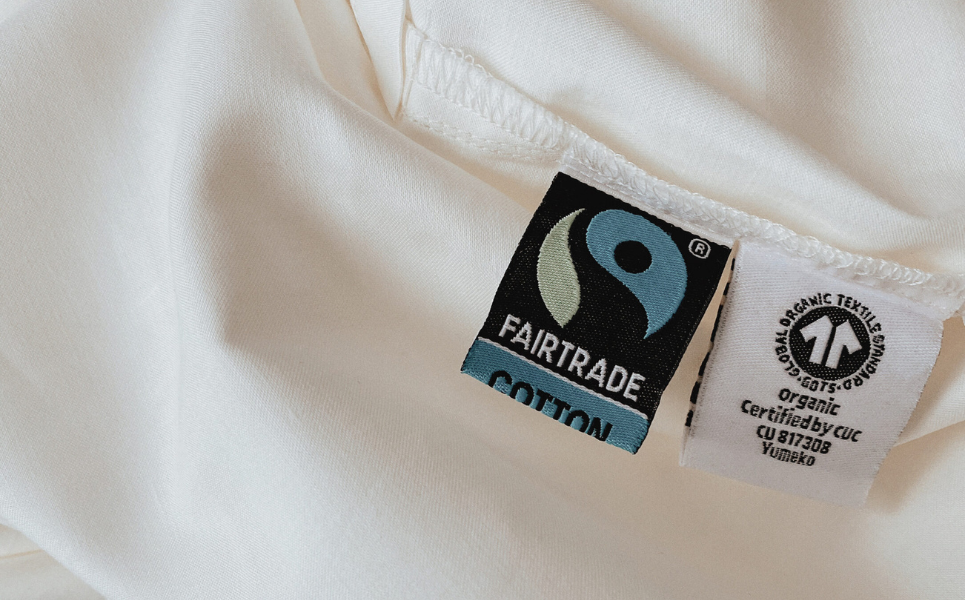
A huge amount of pollution is involved in making Fast Fashion clothing. This is something that many people may not immediately see but should be considered. This pollution already takes place during the production of the raw materials and materials from which the clothing is made and continues when the clothing is transported around the world and even when it is thrown away by the consumer. The clothing industry accounts for 10% of global CO2 emissions and 20% of global wastewater. Harvesting cotton, for example, already requires an enormous amount of water and chemicals to ensure that the cotton plant matures. These chemicals are very harmful to the workers who work with the cotton and to the rivers and fields. Per T-shirt alone, 2500 liters of water is needed and for a pair of jeans it is even 7000 liters. If you then look at organic cotton you don't need chemicals which is much better for the soil and for the workers. Organic cotton also uses much less water. Then again, if we look at the polluting cotton, it also has to be dyed and bleached to get it in the desired color. Dyeing also involves a lot of water and chemicals. The cotton has to be transported to produce clothes and these clothes have to be transported again to be sold in the Netherlands. Fast Fashion is often produced in countries like China, India & Bangladesh and has to travel a long way to get to the Netherlands. During this transport, all kinds of CO2 is released which is also polluting. But it doesn't stop there. Currently less than 1% of all clothing is recycled and the rest ends up in landfills after which it is incinerated which also causes environmental pollution. So, all in all, it is an enormously polluting process.

2. Poor working conditions at Fast fashion factories
Fast Fashion clothing, of course, cannot just be so cheap. It can only be so if all the process steps are done as cheaply as possible. This also means that the tailors assemble the clothes at unacceptably low wages. Child labor is also used in this industry. Around 215 million children are employed worldwide, more than half of whom work in dangerous conditions. Many of these children work in the textile industry. These children often make 12-hour days and receive minimal pay for doing so. But not only in the factories does child labor take place, children are also used in the rest of the chain. For example, when picking the cotton on the cotton seed farm. A well-known example is the Rana Plaza disaster in Bangladesh where the garment factory collapsed because two floors were illegally placed on top of the building. In the process, 1132 workers lost their lives. This disaster became world news and gave a piece of insight into what things were actually like. Unfortunately, this disaster did not cause a turning point and things continue to be like this in many countries.
3. Fast fashion has a much lower quality
The main reason to make clothing for Fast Fashion manufacturers is the profit they get out of it. The more profit they can make on a garment the better. So here the quality of the clothes is not something that is not looked at by Fast Fashion manufacturers and is not important. Because in the end it is also beneficial for manufacturers if your clothes are broken after a while and you go back to the store to buy new clothes. These are clothes that often do not last more than one season, which often have holes in them and whose seams come off quickly. Having the product fixed is often more expensive than buying a product again which in turn causes you to buy a new product and the broken product ends up in the landfill. There is even a name for this phenomenon namely: Planned obsolescence. This stands for planned obsolescence and means that products are deliberately designed with a limited lifespan so that you quickly buy it again. So in this process you are actually pushed into a vicious circle as a Fast Fashion buyer and you keep buying again.

4. Clothing trends are not timeless
Fast Fashion is letterlijk vertaald: “Snelle mode”. Dat betekent dat de kleding snel geproduceerd moet worden zodat de kleding snel in de winkels kan liggen en snel weer bij de klanten terecht kan komen. Dit zorgt ervoor dat mode merken snel in kunnen spelen op trends en dus ook op de behoefte van de consument, want trends zijn nou eenmaal populair en veel consumenten willen dit hebben. Dit zorgt ervoor dat er niet meer twee collecties uitgebracht worden dus in de zomer een collectie en in de winter maar stukken meer. Zo brengt H&M ongeveer 14 collecties per jaar uit en Zara zelfs 24. Dat komt dus neer op ongeveer elke 2 weken een nieuwe collectie met nieuwe producten. Heb je de ene week nieuwe kleding gekocht, kan het zijn dat er twee weken later weer totaal andere producten in de winkel hangen die je ook weer wil hebben. Het nadeel van trends is natuurlijk ook dat het vaak ook weer uit de mode gaat en totaal niet tijdloos is. Na een tijdje belandt het in de kast en wordt het niet meer gedragen en uiteindelijk heb je kledingkast met goedkope trendy kleding waar je na een tijdje niet meer naar om kijkt. Dat kan natuurlijk helemaal anders. Een kledingkast met een aantal mooie en goede basic items is een mooiere en duurzamere optie. Dit zijn slow fashion items die jaren mee gaan en ook jaren gedragen kunnen blijven omdat het tijdloze items zijn.
Al met al brengt Fast Fashion dus enorm veel negatieve aspecten met zich mee. Redenen genoeg dus om hier niet meer achter te staan en juist te kiezen voor eerlijke en duurzame kleding. Slow Fashion is het tegenovergestelde van Fast Fashion en wordt wel op een eerlijke manier gemaakt waarbij gedacht wordt aan mens en natuur. Daarentegen is het kleding van een betere kwaliteit en items die tijdloos zijn en dus veel langer meegaan. Uiteindelijk dus veel verstandiger om een kleding kast op te bouwen met mooie bewuste items in plaats van je kast vol te hebben met Fast Fashion items die je vaak na een tijdje toch niet meer draagt of kapotgaan. Een mooi doel dus om gedurende 2023 mee te nemen en over na te denken.
